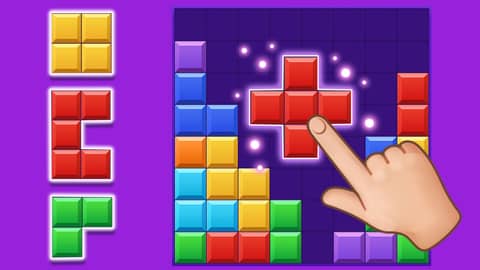
Block Blast has one of those deceptive designs.
At first glance, it looks like the kind of puzzle game you could play half-asleep. The pieces drop in, the colors are bright, the controls are simple, and you think, “This is relaxing.” Then the board suddenly fills up, a tricky shape appears, and the calm disappears faster than you can rotate your phone.
Many players feel this shift – the moment Block Blast stops being a casual time killer and starts behaving like a puzzle that requires actual strategy. The game doesn’t punish mistakes loudly. It punishes them quietly, by slowly removing your options until you have none left.
This guide is built for players stuck in that gap: the people who enjoy the game but want to feel more in control of it. You don’t need gaming experience. You don’t need advanced tactics. You only need to understand a few simple principles that make the entire game feel different.
By the end, you’ll stop relying on luck and start seeing the board like a puzzle that can be shaped in your favor. And if you ever feel stuck, many players use quick online searches or even an AI Search Engine to explore new strategies – not because the game is complicated, but because small insights create big improvements.
Let’s begin with the biggest mindset shift.
Understand What the Game Really Wants
Block Blast pretends to be a game about clearing lines. The animations, the sounds, the scoring – everything points you toward that single goal. But here’s the part most beginners miss: clearing lines is not the main objective. Managing space is.
The board is your lifeline:
- As long as you have space, you have options.
- As long as you have options, the game continues.
Most losing streaks happen not because players failed to clear lines, but because they filled the board too quickly with pieces that blocked future opportunities. If the board becomes cluttered in the wrong places, even simple shapes start to feel impossible.
Here’s the actual hidden rule of Block Blast:
You do not lose when you fail to clear lines. You lose when you lose the ability to place a piece.
Once you internalize this, every move starts to feel more intentional. Instead of asking, “Where can this fit right now?” you begin to ask, “Where will this keep the board open later?” That shift alone can double your survival time.
The game rewards players who think ahead just a little – not in a chess grandmaster way, but in a casual “future me will need space” way. This mindset is what transforms Block Blast from guesswork into something predictable and enjoyable.
Keep the Center Open for as Long as Possible
The center of the board is the most valuable space you have.
It is your breathing room, your emergency exit, and your insurance policy all at once. When the center stays open, almost every shape has a place to go. When the center fills too early, even simple pieces begin to feel impossible.
Beginners often lose because they block the middle without realizing it. They see a gap, place the piece, and feel productive. But the board does not reward productivity. It rewards flexibility. Filling the center feels helpful in the moment, but it silently destroys your ability to adapt.
A good way to think about it is this:
- The center is where future moves live.
- If you protect it, the game stays calm.
- If you clutter it, the game becomes stressful very quickly.
Imagine placing three small blocks in the center early on. Nothing seems wrong. The board still looks manageable. But then the game gives you a long bar or a wide zig-zag piece, and suddenly you have nowhere to put it. The board collapses not because of the difficult piece, but because you used your most valuable space too casually.
A simple rule helps here:
- Place easy pieces on the sides.
- Save the center for the difficult ones.
This single habit makes every game last longer. Even advanced players follow it because it stabilizes the board and reduces the chances of a sudden lockup. The center stays open, and the board stays predictable.
Handle Difficult Shapes With Intention
Every Block Blast player learns this sooner or later: some shapes are friendly, and some shapes feel like they were designed by someone who hates you. Long bars, L pieces, zig-zags – these are the ones that cause most of the panic.
The trick is not to fear these shapes. The trick is to prepare for them.
Difficult shapes need space in very specific formations. A long bar needs a straight runway. An L shape needs a corner that won’t trap it. A zig-zag piece needs an open set of staggered cells. When you place other blocks, you’re not just filling the board – you’re shaping the board so these problem pieces can land safely later.
This mindset shift helps you stop treating the game reactively. You start thinking in terms of accommodation. The board becomes something you design, not something you gamble with.
Some players even look up placement patterns online or run quick queries through an AI Search Engine to understand how experienced players handle these shapes. It’s not about overthinking; it’s simply about seeing patterns you might not notice on your own.
When you place pieces with intention, the game stops surprising you. You begin to anticipate what might come next, and the board starts working with you instead of against you.
Avoid Random Placement
A big turning point in Block Blast is realizing that “a piece fits here” is not a good enough reason to put it there. Random placement is the fastest way to lose a game. The board may look fine for a moment, but one careless move can close off entire sections without warning.
Random placements usually come from urgency. Players think, “Let me put this somewhere quickly so I can deal with the next piece.” But Block Blast rewards patience, not speed. When you place a piece without thinking about its effect on future shapes, you silently harm your board structure.
Instead of focusing on what fits now, focus on what keeps your options open later.
A simple mental habit helps here:
Before placing a piece, ask: If I put this here, will my next shape still have space?
You don’t need a full strategy. You don’t need multi-step planning. You only need to avoid placing something that traps the board for your future self.
Here’s a simple scenario many players experience:
You place a block tightly against the center “because it fits perfectly,” but in doing so, you remove the only space where a long bar could land. The next shape appears, and it’s the bar. Suddenly, the game ends not because of the bar itself, but because of a rushed decision made three moves earlier.
Block Blast becomes much calmer when your placements shift from reaction to intention. Even one second of thought before each move makes a noticeable difference.
Use the Edges as Your Safety Net
The edges of the board are your best friends in this game. They absorb awkward shapes, give you room to maneuver, and protect the precious space in the center. When you use the edges wisely, every piece feels easier to place.
Think of the edges as parking zones. When you get a shape that doesn’t fit smoothly anywhere else, place it along the side or corner. This keeps the center open and prevents accidental blockages.
Edges work especially well for:
- L-shaped pieces
- Zig-zag shapes
- Wide, awkward blocks
- Any piece you don’t trust in the middle
Placing these on the sides gives you two benefits:
- You protect the center, which keeps your board flexible.
- You create more structured openings, which helps future pieces fit more naturally.
Even advanced players rely heavily on edge management. It stabilizes the board and reduces the number of surprise losses. When you make edges part of your strategy, you no longer feel like the game is “turning” on you. The board stays predictable, and you stay in control.
Build for Clearances Instead of Hoping for Them
Many players treat clearances as pleasant surprises rather than planned outcomes. They place pieces wherever they fit and hope that, at some point, a line will magically complete itself. This works occasionally, but it doesn’t produce consistent results.
Block Blast rewards players who design their board with intention.
Instead of waiting for a line to appear, think of every placement as preparation for a future clearance. You are setting up the board so that one or two well-chosen pieces can trigger multiple lines disappearing at once. These small “chains” are easier to create than most beginners realize.
A simple example shows the idea clearly. Imagine you leave a clean column on the right side and keep it open while shaping the rest of the board. When the right piece appears – maybe a long bar or a vertical-friendly shape – the entire column clears instantly. The board resets, pressure drops, and you suddenly have room to breathe.
This kind of setup is far more reliable than placing pieces randomly and hoping they create something useful. You’re not just reacting to the game anymore. You’re shaping it so that future clearances happen naturally. It feels intentional, steady, and surprisingly satisfying.
Block Blast Feels Different When You See the Patterns
When you start applying these simple strategies – keeping the center open, managing the edges, handling difficult shapes with intention, and planning for future clearances – the entire game shifts from guesswork to rhythm. You stop feeling rushed. You stop panicking when a tricky piece appears. You start seeing the board as something you can guide.
The truth is that Block Blast is not a game of luck. It is a game of structure, space, and patience. Once you understand what the game wants from you, the results become predictable. You make fewer mistakes. You survive longer. You score higher. And the game becomes enjoyable again instead of frustrating.
If you ever feel stuck or curious about deeper tactics, some players use quick online searches or even an AI Search Engine to explore creative strategies shared by others. It’s not about memorizing moves. It’s about learning how different players recognize patterns and avoid early mistakes.
The moment you start seeing these patterns for yourself, Block Blast stops feeling like a puzzle that turns on you. It starts feeling like a puzzle you understand.