
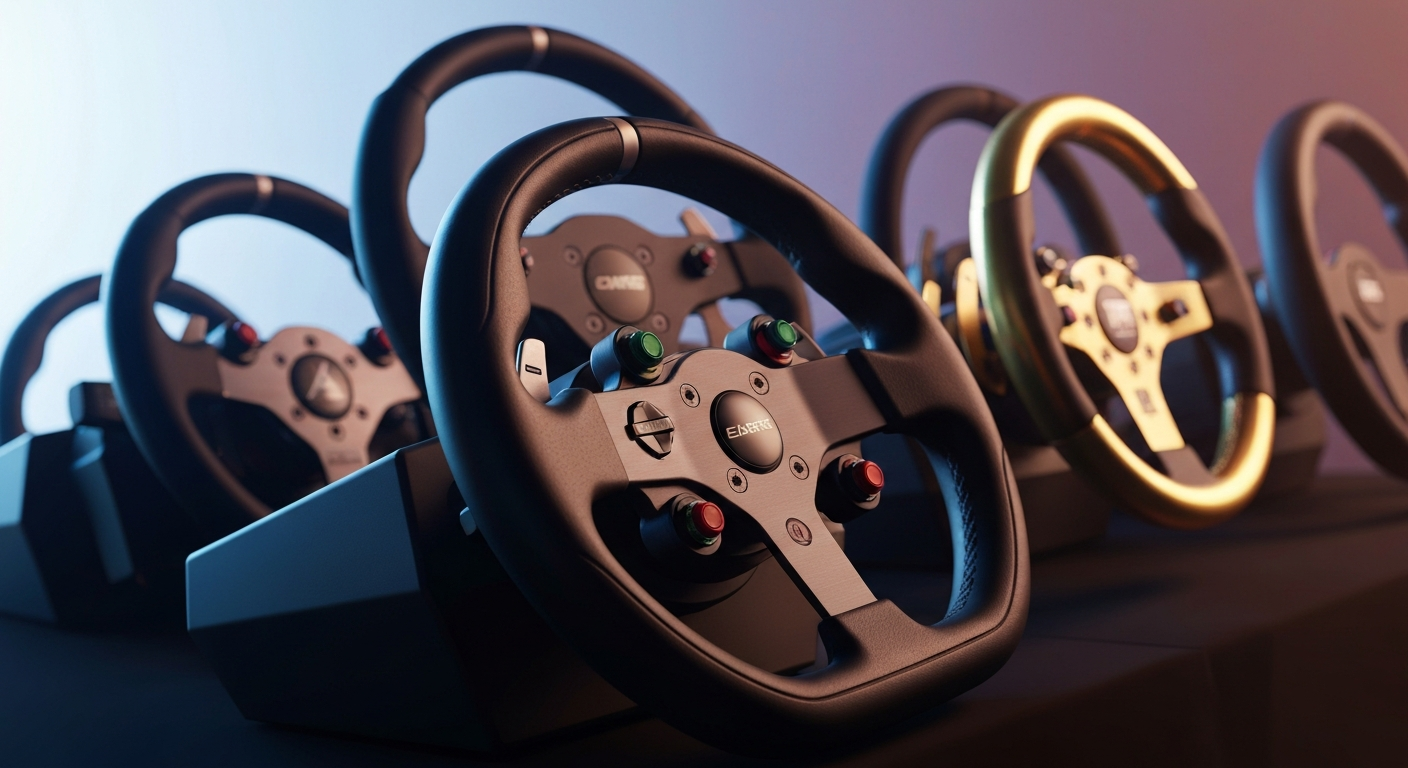
Key Highlights
- Your steering wheel size and style are crucial for control and immersion in sim racing.
- GT, Formula, and Rally steering wheels are designed for their specific racing disciplines, offering unique ergonomics and functionalities.
- GT racing wheels offer versatility, while Formula racing wheels provide rapid inputs, and Rally style wheels give you maximum leverage.
- The choice of steering wheel directly impacts how you experience force feedback and your sense of connection to the virtual car.
- Materials like leather, suede, and silicon affect grip, comfort, and durability.
- For many sim racers, matching the steering wheel style to the car they are driving is key to the ultimate sim racing experience.
Introduction
Welcome to the exciting world of sim racing, where every component of your setup matters. Choosing the right steering wheel is one of the most important decisions you will make, as many features depend on the racer’s personal preference. It’s your primary connection to the virtual track. The steering wheel market is filled with different options, but understanding the core differences is key. This guide will walk you through the three main categories: GT, Formula, and Rally. We’ll help you understand which steering wheel style and size is the perfect fit for your driving needs.

Understanding the Role of Steering Wheels in Sim Racing
In sim racing, quality racing steering wheels, including wired and wireless connectivity sim racing wheels, do more than steer—they deliver detailed feedback from the virtual road to your hands. This lets you feel grip, sense traction loss, and make quick corrections for faster lap times. Advanced wheels create a more immersive experience and provide crucial information.
Modern wireless wheels have revolutionized sim racing, offering realism and precision far beyond basic gaming gear. Built with premium materials for performance, they give dedicated racers the tactile response needed to compete at their best.
How Steering Wheel Size Influences Control and Immersion
The size of your sim racing wheel greatly affects your driving. Smaller wheels require less movement, giving you quicker, more responsive control—ideal for cars like formula racers that need fast reactions. A good steering wheel setup with larger wheels provides more leverage, making it easier to handle strong force feedback and deliver smoother inputs.
When choosing a wheel size, consider the types of cars you drive and your preference for force feedback. Smaller wheels amplify feedback detail but can feel harsher, while larger wheels soften jolts. Some drivers prefer a heavier wheel for endurance events.
Aim for a balance between control and comfort. The right wheel size enhances immersion and delivers a more authentic sim racing experience.
The Importance of Steering Wheel Style for Simulator Setups
Beyond size, steering wheel design and style significantly shape your sim racing experience. Design affects grip comfort, button access, and overall interaction with your car. Matching wheel style to racing discipline enhances authenticity and muscle memory—using a Formula-style wheel for F1, for example, feels natural.
Different wheels serve specific purposes: wheels suit rally or drifting with large inputs; D-shaped wheels provide more leg clearance; rectangular Formula wheels offer compact control layouts.
When choosing a style, consider:
- Ergonomics: Is it comfortable during long races?
- Functionality: Does it have the controls you need?
- Immersion: Does it fit your preferred type of racing?
Popular Materials and Construction for Sim Racing Steering Wheels
The material of your steering wheel impacts grip, comfort, and durability. Budget options use synthetic materials like PU rubber—durable and easy to clean. Premium wheels feature genuine leather, Alcantara (suede), or advanced silicon for better grip, while suede is a natural material that adds a soft texture. The material of the rim varies among different steering wheels, with roughly four main materials being used.
Premium wheels also offer more choices in size and style. Here’s how materials compare:
- Leather: Durable and comfortable, but it can get slippery with sweaty hands.
- Alcantara/Suede: Excellent grip, especially with gloves; needs regular cleaning. PU rubber with silicon surface: Provides a good grip and is easy to clean.
- PU Rubber/Silicon: Consistent grip and very low-maintenance.
Choose based on budget and preference. Quality materials make your wheel feel better and elevate your setup—whether for short or long sessions.
GT Steering Wheels: Features and Benefits
GT steering wheels are versatile tools in sim racing, built for endurance and sports car events. Their medium-sized rims balance quick inputs with smooth control, making them ideal for GT racing and other disciplines, including Assetto Corsa.
Paired with a direct drive system like a Simucube wheelbase, a GT wheel delivers detailed feedback and enhanced car control, especially when using the Simucube wireless wheel system and the Simucube Quick Release Wheelside Kit. Let’s look at the key features that make these wheels popular, from their size to button layouts.
Identifying the Ideal GT Steering Wheel Size
For GT racing, steering wheels typically range from 280mm to 320mm in diameter, mirroring real race cars. This size offers the right balance of leverage for handling powerful cars and responsiveness for quick corrections, ensuring they can withstand use for a long time.
Sim racers often prefer slightly smaller wheels within this range—around 300mm—for better control and a more direct feel, especially at high speeds when using a VR headset. This size enhances precision and makes the car feel nimble.
Starting with a 300mm wheel is recommended for GT simulation, as it offers a great mix of agility and stability. While D-shaped wheels are popular, they provide different functionalities, and round or semi-flat bottom designs are also excellent options depending on your preference, especially when utilizing a Simucube wireless connection for enhanced performance.
Typical Shapes and Rim Designs for GT Simulation
The shape of a steering wheel greatly affects comfort and control. GT steering wheels come in several designs, each offering a unique feel:
- Round: Versatile and traditional, ideal for varied driving styles.
- D-Shape: Flat bottom for extra leg clearance and easy alignment.
- Semi-Flat Top/Bottom: Slightly flattened for ergonomic benefits without being fully D-shaped.
Your choice depends on personal preference—D-shaped rims feel modern, while round rims suit rally or drift styles. GT wheels are typically mid-sized: larger than Formula wheels but smaller and less uniform than Rally wheels. Choose the shape that feels most comfortable to you.
Key Functionalities of GT Style Steering Wheels
Modern GT steering wheels are advanced control hubs, not just simple rims. They feature button plates with inputs for managing traction control, brake bias, and push buttons for tactile feedback—without removing your hands. Paddle shifters enable instant gear changes.
Beyond standard buttons, many GT wheels include rotary encoders for precise adjustments, like cycling dashboard pages or uniquely tuning anti-roll bars. Multi-position switches and LED lights for rev counts or flag indicators enhance immersion, especially when paired with the Simucube Link Hub for optimal performance.
Sim racers prefer wheels that balance accessibility and functionality—enough buttons for key settings without overwhelming complexity. A well-designed button plate with tactile controls can offer better value for a seamless, immersive racing experience.
Comparing GT, Formula, and Rally Steering Wheels
Choosing the right steering wheel style with an ergonomic design can greatly enhance your sim racing performance and enjoyment. While numerous factors influence the selection, many wheels work across categories; GT, Formula, and Rally styles are each designed for specific disciplines. Knowing their differences helps you choose wisely.
This guide compares the performance features of each style—covering size, shape, and functions—so you can find the best fit for your setup.
Performance Differences Across Steering Wheel Types
The performance of a racing wheel is closely linked to its design. Formula wheels are small and compact, built for speed and precise corrections in open-wheel cars, often characterized by smaller diameters. Rally wheels are larger and perfectly round, offering the leverage needed for quick, wide steering on loose surfaces—ideal for rally sim racing.
GT wheels strike a balance between agility and stability, making them well-suited for sports cars and endurance racing. Each wheel’s shape affects car control and allows for precise control, force feedback, and access to features like traction control.
Here’s how they compare:
| Feature | When considering compatibility, ensure the bolt pattern attachment type is verified for each wheel type. | Formula Wheel | Rally Wheel |
| Typical Size | 280–320mm | 250–280mm | 320–350mm |
| Common Shape | Round, D-Shape | Rectangular, Cut-off | Perfectly Round |
| Key Functionality | Balanced controls | Complex button box, screen | Minimal buttons, horn |
| Best For | Endurance, Sports Cars | Open-wheel, Prototypes | Rally, Drifting, Historic |
Suitability for Various Sim Racing Disciplines
Matching your wheel style to your racing discipline offers real benefits. Using a wheel designed for a specific type of racing improves control, immersion, and overall experience. Each major category—GT, formula, and rally—has unique requirements best met with specialized wheels designed for different racing categories.
- Formula/Prototype Racing: Choose a compact, rectangular Formula wheel for fast inputs and easy access to controls.
- GT/Touring/Endurance Racing: A medium-sized GT wheel (round or D-shaped) balances comfort and responsiveness.
- Rally/Drifting/Historic Racing: Opt for a large, round Rally wheel for better leverage and the hand-over-hand steering needed on rough terrain.
Mixing Styles: Choosing Multi-Genre Steering Wheels for Versatility
If you love driving all types of cars, a multi-genre sim racing wheel offers impressive versatility for simulator owners, catering to various racing category preferences. These wheels work well across different racing styles, so you don’t need to swap wheels for every car. A round GT wheel around 300mm is usually recommended.
If you race both GT and Formula cars, a GT-style wheel with a flat bottom and plenty of buttons is ideal, especially if you are considering a new sim. It’s small enough for open-wheel racing yet comfortable for long endurance events—a perfect compromise that suits both categories.
When choosing a versatile wheel, consider:
- Size: 280–300mm diameter is the most flexible.
- Shape: Round or D-shaped rims fit multiple disciplines.
- Functionality: Enough buttons and encoders for both car types.
Conclusion
Choosing the right steering wheel size and style is key to improving your sim racing experience. GT, Formula, and Rally wheels each offer unique features for different racing styles. The wheel’s size and design impact your control, immersion, and performance. In addition, we provide plenty of information in our buyer’s guide blogs to evaluate what best fits your goals and setup, and consider multi-genre options for versatility. For personalized recommendations, contact us for a free consultation!